
What is the Ultrasonic Focused Transducer?
The ultrasonic focused transducer is a device that concentrates ultrasonic energy at a specific spatial point (focal region). Through physical structure design or electronic control technology, it converges divergent ultrasonic beams into a focal point with high energy density, enabling precise action on the target area. Its core lies in significantly enhancing the local energy intensity through "focusing" while reducing energy loss in surrounding tissues.
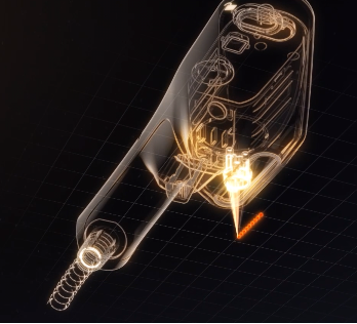
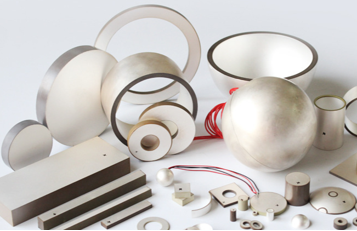
Working Principle of Ultrasonic Focused Transducer :
Thermal Effect (Primary Therapeutic Mechanism) :
High-frequency ultrasonic waves (typically 0.5-10 MHz) are absorbed in tissues and converted into thermal energy, raising the temperature of the target area to 55-85°C within seconds. This causes protein denaturation and coagulative necrosis of cells (e.g., tumor ablation).
Mechanical Effect :
High-intensity sound waves generate cavitation effects (bubble oscillation/rupture) or acoustic radiation force, which are used for tissue fragmentation (e.g., kidney stones) or transient opening of the blood-brain barrier.
Cavitation Effect :
In a liquid environment (e.g., tumors or blood clots), ultrasonic waves induce the violent movement of microbubbles, generating local high pressure/high temperature and mechanically destroying the target tissue.
All Products(11)


- 1
- 2